Introduction Food security has become a strategic priority for the UAE. With limited arable land and harsh climatic conditions, traditional agriculture alone cannot meet long-term demand. This has led to a growing focus on smart agriculture, controlled farming, and technology-enabled production systems. Why Traditional Farming Is Not Enough The UAE faces unique agricultural challenges: Extreme …

Introduction
Food security has become a strategic priority for the UAE. With limited arable land and harsh climatic conditions, traditional agriculture alone cannot meet long-term demand. This has led to a growing focus on smart agriculture, controlled farming, and technology-enabled production systems.
Why Traditional Farming Is Not Enough
The UAE faces unique agricultural challenges:
-
Extreme temperatures
-
Water scarcity
-
Limited soil suitability
These conditions make open-field farming unpredictable and inefficient. To overcome this, controlled and technology-driven approaches are being adopted.
Smart Agriculture Explained
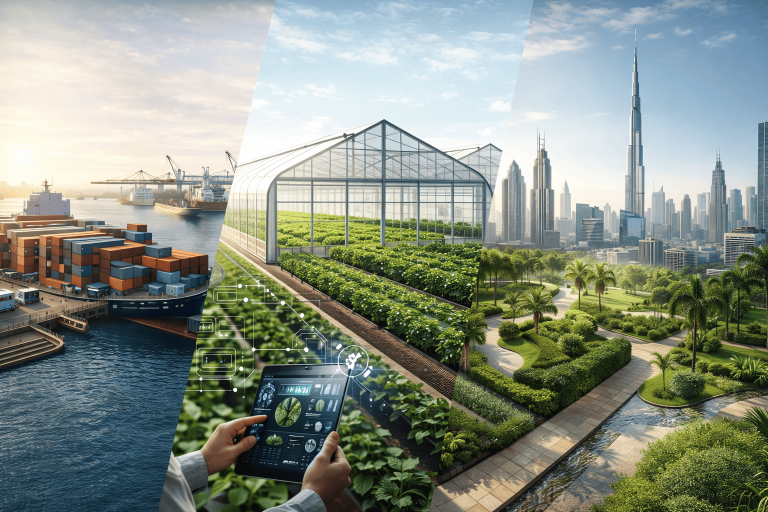
Smart agriculture uses technology and data to optimize farming operations. Key elements include:
-
Precision irrigation to reduce water usage
-
Sensors to monitor soil and crop health
-
Automation to improve consistency
These methods allow agricultural operations to scale without increasing resource strain.
Role of Polyhouses and Hydroponics
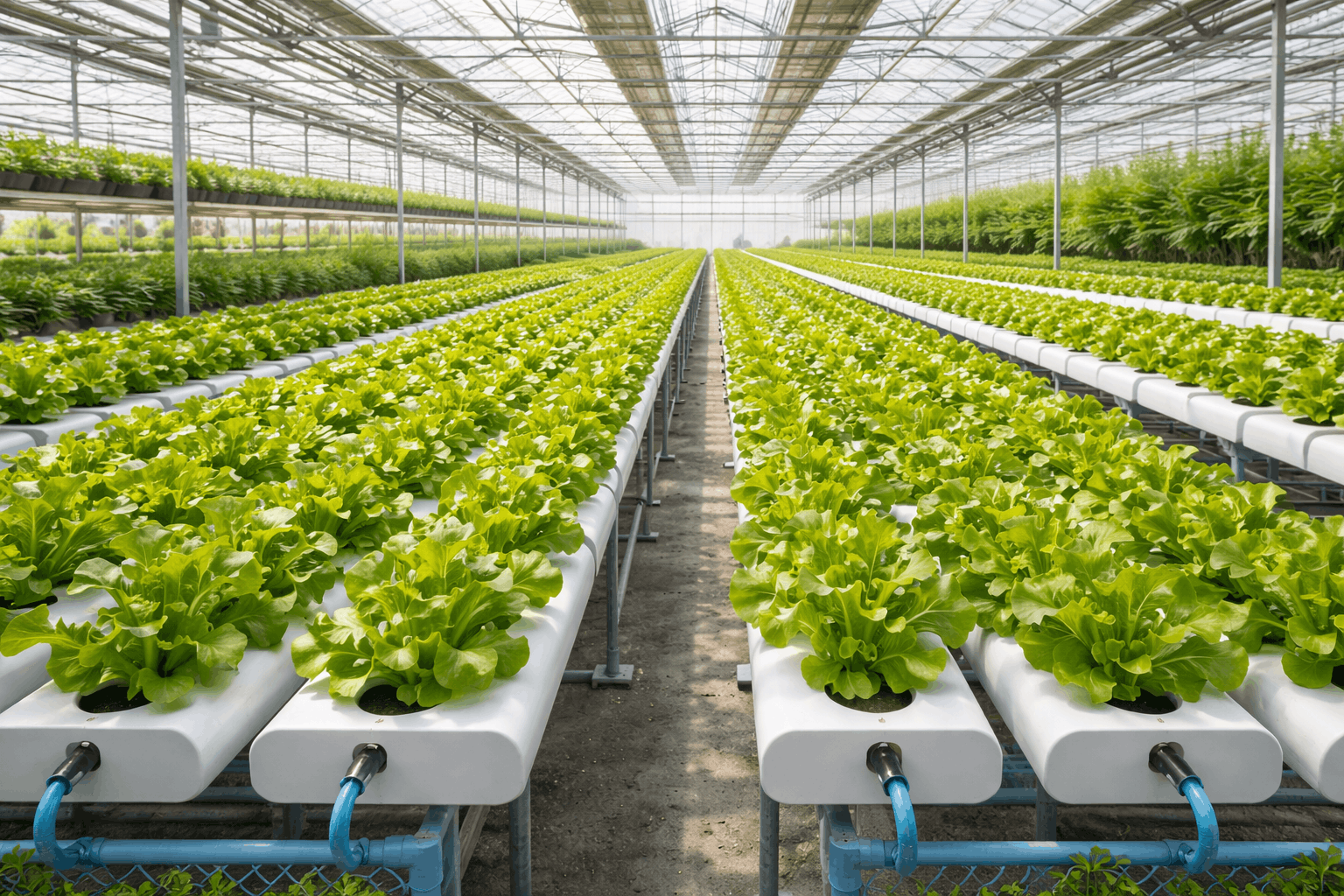
Polyhouse farming and hydroponics are central to controlled agriculture in the UAE.
Polyhouses provide:
-
Temperature regulation
-
Protection from harsh external conditions
-
Year-round production capability
Hydroponics enables:
-
Soil-free cultivation
-
Higher yields per square meter
-
Significant water savings
Together, these systems make agriculture predictable, efficient, and scalable.
Institutional and Government Relevance
Smart agriculture is not limited to private farming initiatives. It plays a critical role in:
-
National food security programs
-
Institutional supply chains
-
Government-backed agricultural projects
Large-scale deployment requires structured planning, technical expertise, and execution capability.
The Bigger Picture
Smart agriculture supports more than crop production. It enables:
-
Reduced import dependency
-
Long-term sustainability
-
Strategic food planning
For the UAE, these systems represent the future of agriculture growth.
Smart agriculture and controlled farming are no longer experimental concepts. They are proven, scalable solutions addressing real-world challenges. As adoption grows, the focus will shift toward integrated, institutional-grade implementation.